As a continuation of Vector RAG and Graph RAG, this article aims to demystify and explain HyDE in very simple terms.
What is HyDE?
Hypothetical Document Embedding (HyDE) is a retrieval technique used in RAG systems to improve search relevance and output. This is highly useful when the user’s queries are short, vague, or don’t match the documents’ wordings.
Why use HyDE?
The vector search works well when the user’s query is long, rich, and descriptive, or when the keywords in the user’s query match well with the stored documents.
In real life, most of the queries are short or vague. For eg:
Refund policy → this is short
Kafa integration → this is vague
This is where HyDE can make a difference. So let’s have a look at how HyDE works:
Let’s imagine the user query is
“Kafka Integration ecommerce”
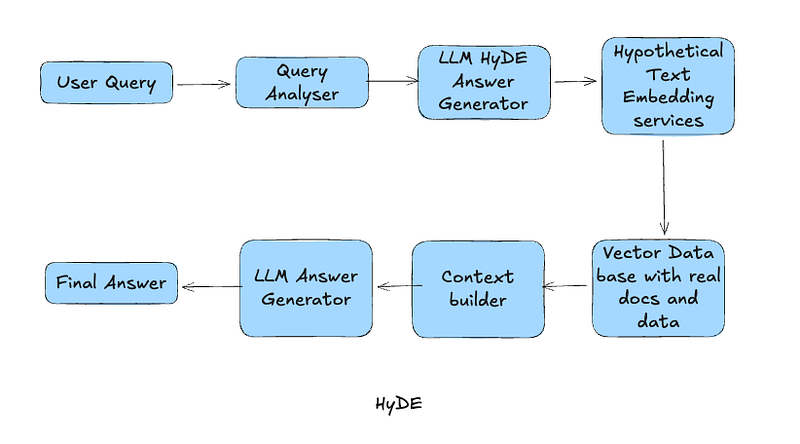
How HyDE Works :
HyDE
1. It will ask the LLM to write a hypothetical answer for the question.
The LLM will generate the following hypothetical text, and this text will not be shown to the user:
“To integrate Kafka with an e-commerce Order Management System (OMS), Kafka topics can be used to publish order events such as order created, order updated, order cancelled, etc. Producers in the OMS will publish events, while downstream systems like ERP, payment, or shipping systems can subscribe to these topics. This enables asynchronous event-driven integration with guaranteed message durability and scalability.”
2. Convert this generated text into vector embeddings
If you look at the above text, it is rich in relevant technical terms and content. It has more correct keywords and an almost complete summary of how it should be done.
3. Take these keywords and search in vector embeddings
Now HyDE will take keywords from the above and search in the vector embeddings and will find Kafa integration documents, Event-driven OMS documentations, ERP integrations, E-commerce integrations, etc.
This will be much better than searching directly with “Kafka Integration ecommerce.”
4. Retrieve data from real documents
Once it gets the data, it will discard the data from hypothetical documents and pass the information to LLM for final answer generation.
Where to Use HyDE?
Hyde works best when user queries are smaller and more vague, such as when building an enterprise search or knowledge base, or when your users are non-technical.
For eg, this will be highly effective in
a. Building Customer Service bots
b. Search in E-commerce platforms
c. Internal knowledge-based building and searching
d. CRM systems
At the same time, this won’t be effective to use in applications or use cases like:
a. Extracting factual information ( medical field, extracting ID’s, numbers etc)
b. When the query already has detailed information, then it’s better not to use HyDE.
c. The hallucination risk is higher with HyDE, so it has to be carefully architected
A bonus example for more clarity
User query :
“ What should I include in a product case study?”
Hyde will generate a hypothetical answer:
“A product case study should include the problem statement, personas, business objectives, solution approach, key features,KPIs, …..”
Then use these highlighted keywords and search vector embeddings and product case study templates with relevant, practical, real-life information for those keywords.
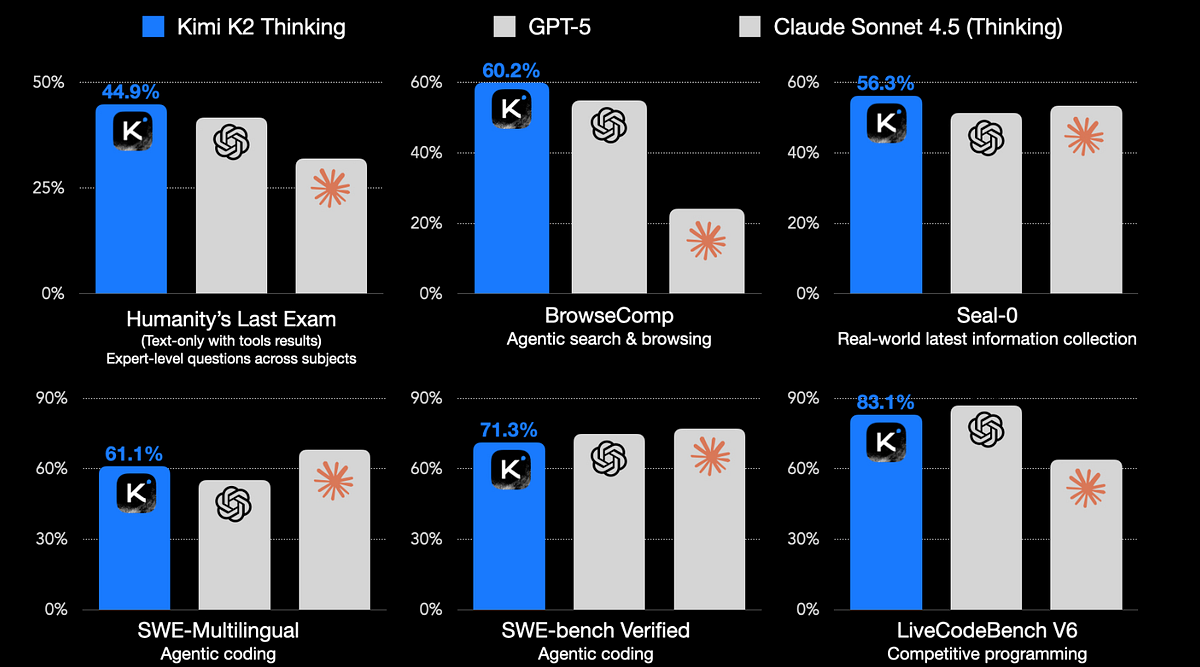
A Chinese startup has launched yet another open-source AI model. Alibaba-backed Moonshot AI just dropped Kimi K2 Thinking, and “it beats GPT-5 and Claude Sonnet 4.5, period!!!”
This is bigger than Deepseek-R1, yet the media have chosen to remain mute about it.
As they claim :
Kimi-K2-Base: The foundation model, a strong start for researchers and builders who want full control for fine-tuning and custom solutions.
Kimi-K2-Instruct: The post-trained model is best for drop-in, general-purpose chat and agentic experiences. It is a reflex-grade model without long thinking.
And the results speak for themselves, backing up their claims:
Performance of Kimi K2 Vs Others
Even more impressive: “This Chinese startup pulled it off despite facing both regulatory restrictions and a lack of access to cutting-edge chipsets.”
I’m certain this is just the beginning and there’s much more to come. Now the world is racing to crack Artificial General Intelligence ( AGI) and Artificial Super Intelligence (ASI). It mirrors the race for atomic energy in the 1940s — whoever succeeds first will hold immense power, capable of shaping (or potentially weaponizing) this technology against others.
It reinforces the idea that restrictions aren’t the path forward. Just as humanity once came together to control the power of atomic energy, we now need to collaborate, share technology responsibly, and ensure it’s used wisely. Thus preventing it from falling into the wrong hands.
When we try to replicate the real-world thinking or mimic the human thought process in any form or shape, it’s important to recognize that the world itself is inherently relational. Humans understand, react, and make decisions by connecting all these — people, emotions, experiences, and contexts. Then why are we forcing to compress all this richness into vectors, thus effectively stripping away the relational semantics that give problems their real meaning?
When we use the vector DB for storing, we are losing the relationships. In Vector DB, each piece of data is converted into a vector embedding a long list of numbers, and these numbers will be saved in the vector database. When you search for something, it uses a similarity search algorithm like cosine similarity, Euclidean distance, etc, to find the most similar vectors. This is ideal for simple question-answer models, recommendation systems, etc, where we do Single-hop queries or similarity search or try to retrieve stats.
But what will you do when you can’t compromise on accuracy and speed, and it is non-negotiable?
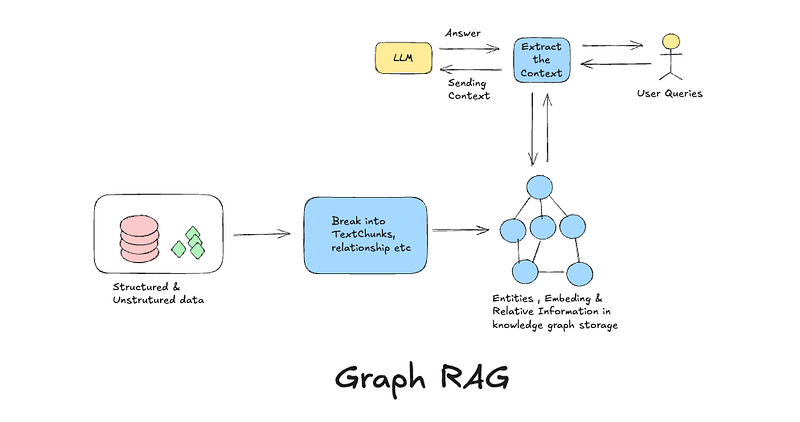
This is where the Knowledge Graph or Graph RAG comes in handy. This can do multi-hop travles and each hop can have weightage. In a knowledge graph, the data is stored as facts, entities, and relationships. Where each entry represents explicit knowledge, and relationships between entities are explicitly defined.
This is why this is useful in tasks where reasoning & inference, precision & accuracy, ontology & the relationships matter the most.
The simple difference between Vector RAG and Graph RAG is as below:
Vector RAGGraph RAGDifference between Vector & Knowledge Graph
This does
This doesn’t mean you can’t interchange these. Instead, it’s better to match your data structure to your reasoning requirements, not your technology preferences.
In practice, its better to use a hybrid architecturecombining vector, graph, and relational databases to leverage the strengths of each. This approach allows you to retrieve both meaningful (semantic) and precise (factual) information, especially when integrated with an LLM.
After the last two posts, many have reached out to me, and we have had some good discussions. Thank you for all the feedbacks and sessions.
One question that keeps coming back to me in all those meetings was “How will this impact the current retail ecosystems?”
That question inspired me to write this piece. In this article, I won’t dive deep into each system & scenarios, but rather provide insights and pointers on what actions to take and which areas are likely to experience change.
With Open AI Apps, the potential scenario we are going to face with e-commerce in the near future is :
More and more companies will start using ChatGPT as another channel for selling their products, which means most of the retailers will be forced to go into that channel. So if you decide to go down that route, your current e-commerce echo systems and architecture are going to have some impacts or changes.
As we transition from click commerce to context commerce, your content becomes the decisive factor — it will either make or break your success. The conversational customer journey could be like this:
Conversational Product Discovery
Customer opens ChatGPT and asks:“Hi <Brand:>Find me a black running shoe size 10, under $120.”
ChatGPT will show the shoe size 10 that are less than $120
Customer: “Show me the blue one.”
ChatGPT will look at your product feed and search data from RAG and see if you are selling blue shoes, and present that to the customer.
Customer: “Add this to cart, size 10”
ChatGPT will call the backend to create a cart and show that to the customer.
Customer: “Checkout this”
ChatGPT calls the backend, it calculates the taxes & shipping, returns a hosted payment session URL or a Stripe PaymentIntent (if card entry required).
Customer: Enters the card details, and the purchase is completed.
In order to achieve the above customer journey, we need to do the following things:
Authentications & Cart Merges
This will be the first touch point of change, and it’s not a biggie, but it’s a change that has to be thought through.
Similar to how you authenticate the users from the website and apps, you need to map the ChatGPT sessions with the site/app sessions. You will have to manage the guest users, existing users, and existing users with an active cart scenarios etc.
Commerce Orchestrator
Worth thinking about creating an event-based commerce orchestrator with an MCP that dictates how your commerce flow should be. Some of the key responsibilities of this layer could be :
Product feeds to LLMs and other systems
Creating /Merging cart & Checkouts with different channels
Payments
Inventory & Price feeds
Personalization
Updating & retrieving from Knowledge Base
Product Feed
Most of the retailers should expect a change in the product feed because,
The traditional product feed from ERPs or your existing PIMs will not work for LLMs. I am not talking about the format of these feeds, instead it’s about the extra information, the information that is traditionally not part of product feeds from these systems( for eg: Including Inventory along with the product feed, Tax as final value based on regions etc)
So you could expect a change in the way you create this data and how you send this data to LLMs.
Knowledge Base
Simply put, this is the way you can expose your products, data, and services to the RAG. This is a must, and none of the retailers have this right now. I have touched upon this in the article:SEO & AEO: Any Different?
This is a change not just in your tech echo system, but almost every department in the business has to work together to figure out all the questions they have over the period of time, create a strategy, structure it, and publish this as content on the website.
This will call for a change in the way you create content in CMS; you will have to update the product content, and it is going to be a continuous process.
Reducing Hallucinations
New term for you ? Don’t worry, it just means that RAG will read the data, and based on that data, the LLMs might hallucinate and give you a reply that is slightly off. For eg:
While chatting, the customer might ask, “Is this an all-terrain shoes ?”. The LLM will reply saying: “Yea, it’s an all-terrain shoe ”
Customer: “Is it waterproof?”
LLM: “Yes it is “
The last answer is a hallucination of the LLM, Based on your data, it started thinking that since it is an all-terrain shoe, it should be waterproof.
To stop these hallucinations, we have to write system prompts like :
“Do not invent product features or availability. If unsure, respond: ‘I can’t confirm that — check this product page’ and provide link/doc reference.”
We call these Evals. This helps LLMs from hallucinations
Don’t worry, there are tools out there that we can easily plug in and do this quite easily. If you are going to use Agent from OpenAI, you can easily input your evals into that.
Payments
The new evolution of AI-enabled commerce is powered by the Agentic Commerce Protocol (ACP), a new, merchant-friendly open standard codeveloped by Stripe and OpenAI.
Your payment platforms will also soon release this. It’s not rocket science for Service Integrators because most of the work will be done by your gateway. You just have to call it in the right way:
How it works is :
After the customer chooses their preferred payment method, your payment gateway will issue a Shared Payment Token (SPT), a new payment primitive that lets applications like ChatGPT initiate a payment without exposing the buyer’s payment credentials.SPTs are scoped to a specific merchant and cart total. Once issued, ChatGPT passes the token to the merchant via API. The merchant can then process the transaction through your gateway.
Personalization
You can build this along with your commerce orchestrator or if you have a personalization engine, then pass this information, like session history + browsing + purchase history to surface products.
Expose getRecommendations(session_id, product_id) as a tool for ChatGPT to call. Keep your customers’ privacy in mind and only share the IDs and small metadata.
Above is not a comprehensive list of impacted areas, but it covers almost all the basic areas that will have changes. I tried to keep it to the basic impact level so that everyone can build on top of this.
The impact of change will be different for different retailers and is solely based on your current architecture. Your imagination and budget also plays a role in this , we could even think about adding an agentic layer in your architecture and much more.
The great thing about the new agents being rolled out across all LLMs is that development will become much faster. You’ll be able to test creative ideas more easily. I believe that in this new world, imagination will face far fewer limitations due to technological constraints.
What do you think? If there’s a specific area you’d like to discuss, feel free to leave a comment or reach out — I’d love to continue the conversation.
Almost 2 years back, when I was working with one of my clients, he asked his SEO team: “How can we get shown up in ChatGPT”? The answers were quite different, and most of them were not quite sure how to approach this.
Fast forward two years, and we started seeing changes in the way ChatGPT presents the results and became a new channel in revenue generation. Seems like many were ignoring or were not aware of it.
Recently, I heard the same question in the meeting room and the responses weren’t much different. During that meeting, I encountered numerous obnoxious comments, such as…
SEO is going to die.
3. You can’t optimize for AEO
4. Someone even gave an obnoxiously big quote to do AEO.
5. and many more
It was all a mess. The big takeaway question I have is, “ Are they different? Is SEO going to die? I will try to simplify things as much as possible, so let’s dive in!
Before we start, let’s first look at the basics and definitions.
AEO → Answer Engine Optimization (some people will call this GEO, but don’t worry, it’s the same. It just means Generative Engine Optimization, but I prefer and believe the first one is a better choice of words because generative engines mean that they can generate images, videos, etc, but our context is around text.)
SEO → Search Engine Optimization
I am not going to explain this here. Because there is already a wealth of information available online about this, you can explore further by reading…
The first question is: Is it worth investing money and effort into doing AEO optimization?
The simple answer is Yes! Because, as per the latest data, the conversion from LLM is 6X better than Google. After the latest update of ChatGPT, the search results are showing up as tiles and clickable links; the conversion is going to go up even further.
So, how can you show up in LLMs?
How do you show up in LLM chats, like ChatGPT, Perplexity, Claude etc.
In order to understand this, we need to look at how this used to happen in the SEO world.
Simply put, in traditional SEO, we used to create landing pages for high-volume keywords. Over a period of time, you will get domain authority, get value for your url, etc.
With AEO, this stays the same, but the Head and Tail are different.
For those who don’t understand head and tail in SEO:
Head or Head Terms: Head terms are phrase that refers to keywords which are broad in nature and have a high volume of monthly searches. For eg: Shoes, running shoes, pet food, pet toys etc..
Tail or Long-Tail: Long-tail keywords are the more specific, and therefore less frequently searched-for, phrases related to a chosen topic and its head terms. for eg: “wide toe box running shoes”, “best dog toys for angry dogs”
What’s different about the Head in the AEO world?
If we simplify things in the AEO world, the head is whatever you do in SEO plus + getting as many mentions in the citations. If you get mentioned in a citation, you will eventually start showing up in the LLMs.
What’s different about the Tail in the AEO world?
The tail is larger in chat because of the follow-up questions. As per the latest study, the average words in an LLM tail is 25 vs 6 in traditional SEO.
So basically, this means certain things are in our control, and that you could optimize.
Before looking into those, let’s try to understand how LLMs are finding information in a simple way.
Learning Models of LLM
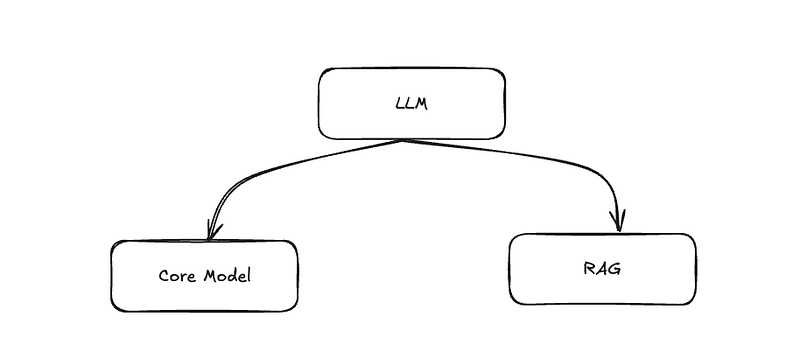
At a high level, the LLMs have two core learning modules: the Core Model and the RAG( Retrieval-Augmented Generation).
Leaning Models of LLM
Core Model:
This crawls millions and millions of web pages and trains the model. This is as if we read books and get knowledge about the world.
For example, if you type who invented the electric bulb, then it will automatically predict the next word “Thomas Alva Edison”.
RAG (Retrieval-Augmented Generation):
This is the equivalent of a search. This means that LLMs do the search and then summarize the search in simple English.
So if we know how and where LLMs look and value more, we could optimize and get our results across to LLMs using the RAG module. Because influencing or changing the core model is not easy and would require a lot of effort, it may not even yield the desired results in the near future or not at all.
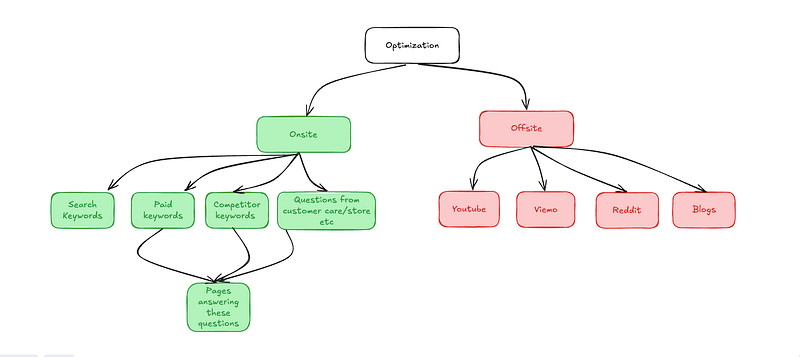
Onsite & Offsite Optimisation
So let’s look at what’s in your control and what you can do: There are things you can do onsite and offsite. We are not going to go into detail, as this is intended to give a high-level idea and a real starting point to understand the topic.
Optimization
OnSite Optimization:
Anything that you can do on your site is called onsite, like site content, pages, indexes, etc. These are things that are 100% in your control.
Remember the point AEO = SEO + Something Extra.
What are these “ somethings”? The strategy for finding some of those perks is:
Find the questions people ask, then answer them as much as possible on your site
If you could create a page with all the possible questions users will ask, then you could win this. But the question is, how to find these questions?
Step-1 :
Take the search data, find the keywords from that. Use these keywords and create questions for those using ChatGPT.
Step -2:
Identify all the keywords currently being bid on in paid. Use these keywords and create questions for those using ChatGPT.
Step-2:
Find the keywords your competitors are bidding for. Same as above, create questions for those using ChatGPT.
Step-3:
Get all the questions which is being asked to your customer support teams, store team, delivery teams etc.
Step-4:
Answer all of these and create landing pages for these. If you are an e-commerce company, then you could even answer some of the product-specific questions in the product page itself.
Key takeaway: The more questions you answer, the better
Off-Site Optimization:
There are many things that you could do, but we are trying to cover only the high-level and the basics. You need to strategize for each of these and execute and evaluate them continuously.
1. Who is showing up in Citations?
Citations are sites or content that talk about your product or company, so that you sound more authentic. Sounds like traditional SEO, right? But LLMs have a slightly different way of looking at this(maybe this is another topic for another day).
Search about yourproduct or content in LLMs and check which citations are appearing — this tells you where you need to have a presence. These are some quick wins
“The basic rule is that the more citations, the better.”
2. Some trusted places LLMs refer to and value for citations
These are some of the places LLMs value the most ( this is as if now, and these examples are generalised for all LLMs. This might & will change in the future)
a. Youtube
b. Viemo
c. Reddit
d. Blogs
e. Credible sites
In the above YouTube and Vimeo videos are easy wins. Another quick, but expensive strategy will be : If you are ready to spend money, then you could get referred to some of the prominent players in their content (citations). This will be expensive but an easy, risk-free winning strategy.
Difference between Search and LLM
In search, it targets thousands of keywords on one page and matches them against the search term. In the case of LLM, instead of keywords, it looks at questions and follow-up questions, then it makes context out of it before showing the results. This means if you provide answers to those questions, you have a chance of appearing in the results.
Now that we understand the basics, let’s look at what happens when someone searches for “wide toe box running shoes” in an LLM.
First, it looks at its internal knowledge (core module) and sees if it has relevant information. If so, it responds almost instantly. If not, it will deploy the RAG to fetch the results before generating a response.
This is where your onsite and offsite optimization will come into play, and “voila, you are there!”.
So now, coming to the most important question, which we asked at first: Is SEO going to die? Is SEO different from AEO?
Simple answer to both is: Not really!
We have been hearing this theory that “Google search is going to die”, for a long time. We have heard this many times with the launch of Facebook, Insta, TikTok, etc., but the fact is, Google hasn’t died and is not going to die anytime soon. Instead, all of these have become new channels to businesses.
So LLMs are going to be another channel, probably the most converting channel. ( This is already happening- you might not be able to see this in your analytics. Why you are not seeing this is a whole topic of its own (maybe another topic for another day).
Second part of the question: Is SEO different from AEO?
I would say there’s definitely a lot of overlap, and the basics of SEO remain the same. At the same time, AEO requires some additional efforts, and that will complement SEO.
I tried to keep the explanation as simple as possible to give you a basic understanding of how this works. We have barely scratched the surface, but I believe this gives a solid starting point to build your knowledge further. I would love to hear your thoughts and take on this in the comments…





 Trooming