
A common misconception in arguments is that if you can prove yourself right then the other person is automatically wrong.
Nowadays if you switch on the news channels you will see people arguing to prove their point, even the news anchors are fighting to prove their point.
This thought process and the influence of social media platforms have resulted in political polarization. The world is diverged towards ideological extremes, which are far from the center.
This results in intolerance, and this Socio-Religious intolerance is increasing day by day. Leading social media platforms are playgrounds for everyone to argue, comment and contribute in any format. In this process they new care about facts, they just want to prove that they are right.
Have you ever thought why are they fighting so hard to prove their point?
This is because we always think of the result of arguments as binary, ie. If you could prove yourself right then the other person has to be wrong.
Is that really so?
Let’s have a look at the two answers we have :
Right and Wrong
What makes someone right/ when is someone right / What is the definition of being right?
The definition of “Right” according to Britannica is :
The meaning of right depends on whether you use the word before or after the noun
- When it is used after a noun then the meaning of the word “Right” is “Morally or socially correct or acceptable”:
Eg: Stealing is not right
2. When it is used before the noun, then it means “you are agreeing to a fact or truth”
Eg:
a. The right answer is —
b. She was right about him not having a job.
The second one is more related to tangible augments which data, proofs, facts, etc can justify. So let’s look at the first one:
It says right means “ Morally or socially correct or acceptable”
So the immediate next question will be who is defining morality/ what is socially right /acceptable for society. The answer is not that simple.
Social norms are the perceived informal, mostly unwritten, rules that define acceptable and appropriate actions within a given group or community, thus guiding human behavior. They consist of what we do, what we believe others do, and what we believe others approve of and expect us to do. Social norms are therefore situated at the interplay between behavior, beliefs, and expectations.
These social norms, morality, or acceptability vary between ethnicities, cultures, countries, regions, companies etc..
For example, it is socially acceptable to smoke weed in some societies VS some don’t socially accept this and consider this a criminal offence.
Imagine two guys from these two societies arguing about it. Then how can you prove who is right and who is wrong? It will be like below:
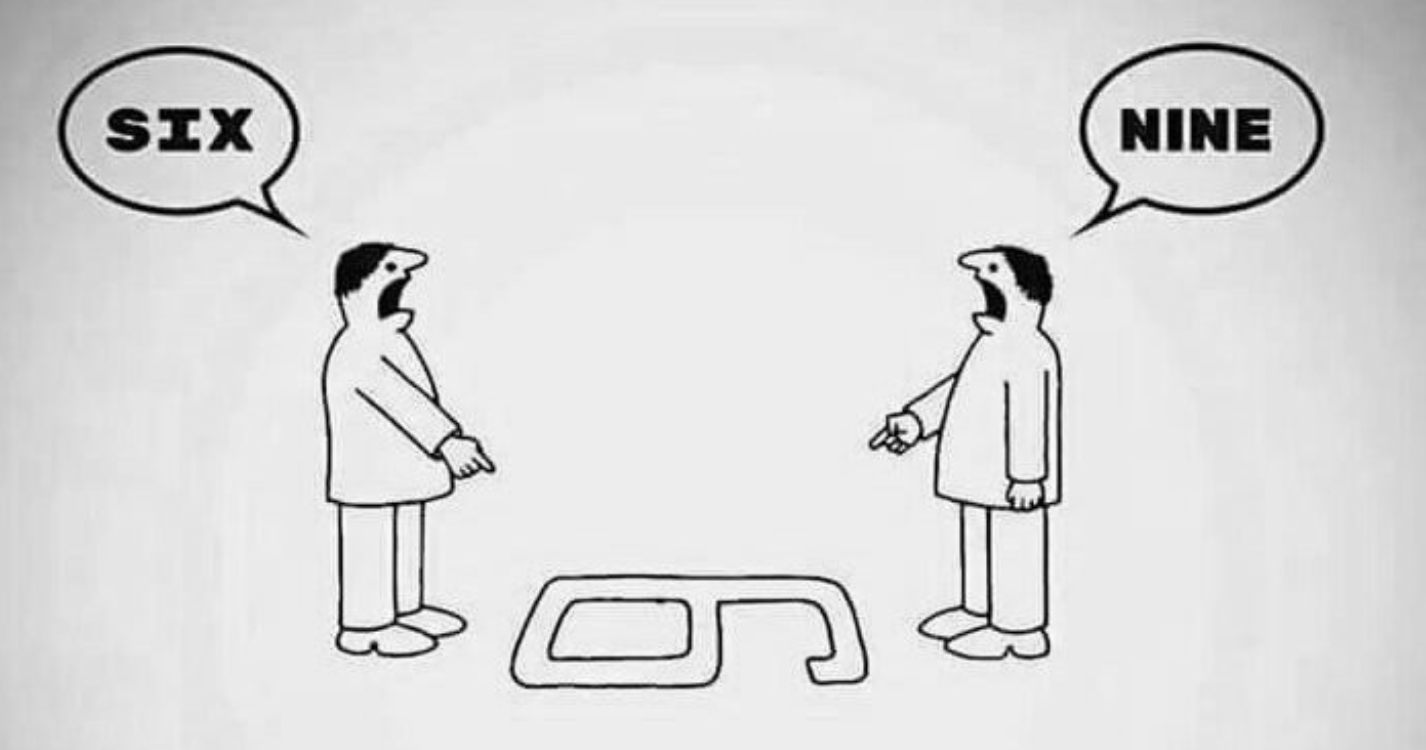
So when you are right doesn’t means that the other person is wrong. Instead, it just means that you haven’t seen life from the other side.
 Trooming